Analysis by CardinalClaw · Updated
Why roofer marketing is a different game
Most trades market against steady demand. Roofing markets against the weather. A single hail or wind event can create a season's worth of work in an afternoon — and the roofer who is already ranked and already named by AI when owners start searching wins the wave.
Demand is event-driven, not even. Hail and high-wind events tracked by the National Oceanic and Atmospheric Administration and the National Weather Service are what trigger the search spikes, and a federal disaster declaration from FEMA can flood a county with claims overnight. The marketing job is not to create demand; it is to be the first verified answer the moment a storm creates it. Paid ads can chase that spike, but they cost the most exactly when every crew is bidding.
A large share of the work also runs through insurance. The Insurance Information Institute tracks how storm and hail losses drive homeowner claims, and for roofers that changes the whole conversation — deductibles, supplements, and adjuster timelines, not just a price per square. Pages that answer those claim questions get cited by AI engines because they are genuinely useful; a generic services page does not.
Then there is the local picture, and it is striking. We pulled the roofing permits filed in Hendersonville, North Carolina, and found one company already controls more than a third of the market. That concentration — alongside a large do-it-yourself pool — is exactly the kind of opening a focused marketing program is built to exploit, which is why the data section below leads with it.
What a roofer can prove that a lead-seller cannot
- Manufacturer certification from GAF Materials Corporation or equal
- Membership in the NRCA
- A documented storm-response time
- A written workmanship warranty
- Photographed, dated local tear-offs and re-roofs
The search data behind roofer marketing
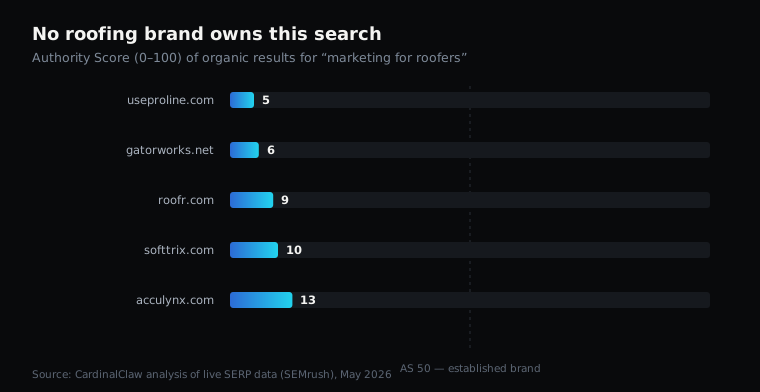
We tested the live U.S. results for the terms roofers compete on and measured the Authority Score — a 0-to-100 estimate of ranking strength — of every site on page one for "marketing for roofers." We found a field of weak incumbents: the strongest page-one result scored just 13 out of 100. For context, the keyword "digital marketing for roofers" draws about 880 searches a month at an SEO difficulty of 12, with an average paid cost of $16.21 per click.
| Domain ranking on page one | Authority Score (out of 100) |
|---|---|
| useproline.com | 5 |
| gatorworks.net | 6 |
| roofr.com | 9 |
| softtrix.com | 10 |
| acculynx.com | 13 |
Source: CardinalClaw analysis of live SERP data (SEMrush), May 2026. An established national brand typically scores near 50.
The local market tells the same story from the demand side. We pulled 202 roofing permits filed in Hendersonville from 2024 to 2026 and found the field is both concentrated and wide open: one company, Quantum Industries, holds 36.6% of them, all other licensed roofers split 36.4%, and homeowners pulled 27% of permits themselves. That do-it-yourself 27% is a re-roof upsell pool that almost no one is marketing to.
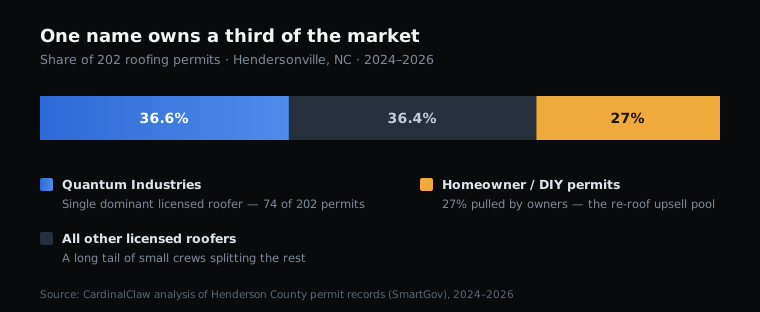
Put the two together and the opportunity is clear: a search field with no strong incumbent, a local market where one competitor is beatable and a quarter of jobs never reach a contractor at all. The roofer who ranks and gets cited first captures both the storm spikes and the steady re-roof base.
What roofer marketing actually costs
Every roofer already buys customers somehow. The real question is whether the money funds a flow that stops when you stop paying or an asset that keeps producing through the next storm. Here is how the three channels compare on real numbers.
Google Ads
You pay per click whether or not it becomes a roof. Roofer terms run about $16 and the price climbs hardest right after a storm, when every crew bids at once.
Storm directories
Lead sellers resell the same storm lead to three to five roofers. You compete on price the second it lands, and the supply is theirs, not yours.
SEO + AEO
A retainer builds ranking and AI citations you keep. The fee is fixed, so it is already working when the storm hits instead of spiking with everyone else.
The ranges above are industry-typical, not a quote — your numbers move with storm cycles and your insurance-versus-retail mix. The structural point holds: paid clicks and rented leads reset to zero the day you stop and cost the most when demand peaks, while earned ranking is the one channel whose cost falls per job the longer it runs. For most roofers the right move is paid ads during storm spikes with earned ranking built underneath for the steady base.
How we build roofer marketing that compounds
We do not spin up a template per town — thin pages built that way get filtered by Google and ignored by AI. We build a small set of pages that each carry real, verifiable detail, then measure and expand what earns work. Because roofing demand is seasonal, the timing matters as much as the build.
Audit and baseline
We measure where you rank for roofing terms today and whether ChatGPT, Perplexity, Gemini, and AI Overviews name you. That baseline is the number we hold ourselves to, set before storm season.
Fix the foundation
Site speed, schema markup, and a fully built Google Business Profile come first, because that is what surfaces you for roofer-near-me searches the moment a storm drives them.
Publish proof
We turn manufacturer certifications, claims help, storm-response times, and real tear-offs into pages the engines can quote — including content for the do-it-yourself owners no one markets to.
Measure and compound
We track rankings and AI citations every month and make sure you are ranked before the next hail season, not scrambling after it. The asset gets stronger on a fixed budget.
What is included every month
- Rank tracking on roofing terms plus AI-citation checks
- Google Business Profile management
- New roofing and claims-help pages built to be cited
- Schema markup and technical fixes
- A plain-English report you can act on
Roofer marketing FAQ
How much does digital marketing for roofers cost?
Roofers pay for customers three ways. Google Ads clicks on roofer lead terms average about $16.21 each and spike in price right after storms when everyone bids at once. Shared storm leads from directories typically run $15 to $100 each and are resold to several roofers. An earned-ranking retainer that builds SEO and AI citations typically runs $1,500 to $4,000 a month and is already in place when the next storm hits.
When should a roofer ramp up marketing before storm season?
Earned ranking takes months to mature, so the work has to start well before peak hail and wind season, not during it. Roofers who wait until a storm hits are forced into paid ads at their most expensive, competing with every other crew at once. We aim to have clients ranked and AI-cited a full season ahead.
Should roofers buy storm leads or rank on Google?
Bought storm leads arrive fast but are sold to three to five roofers, so you compete on price the moment one lands, and they cost the most exactly when demand spikes. Earned ranking and AI citations send work to you directly and the cost is fixed. Most roofers should run paid ads during storm spikes and build earned ranking underneath for the steady base.
How do AI search engines pick which roofer to name?
Engines like ChatGPT, Perplexity, Gemini, and Google AI Overviews favor pages with structured data and verifiable facts: manufacturer certifications, license details, warranty terms, and real local jobs. Answer engine optimization formats those facts so an engine can quote them directly. A roofer who publishes that proof gets named while competitors who only list services do not.
Do insurance and retail roofing need different marketing?
Yes. Insurance-driven re-roofs after storm damage need content about claims, deductibles, and supplements, while retail and new-construction work competes more on price, finance options, and materials. The keywords, the landing pages, and the calls are different. We build for whichever mix of work actually pays your crews.
Will roofer marketing work outside Hendersonville and Asheville?
Yes. The demand and weak page-one competition shown above are national U.S. figures, and the storm-and-claims pattern repeats in every market. CardinalClaw is based in Asheville and Hendersonville, North Carolina, and also serves roofers nationwide. See our contractor marketing breakdown for how the same method applies across trades.